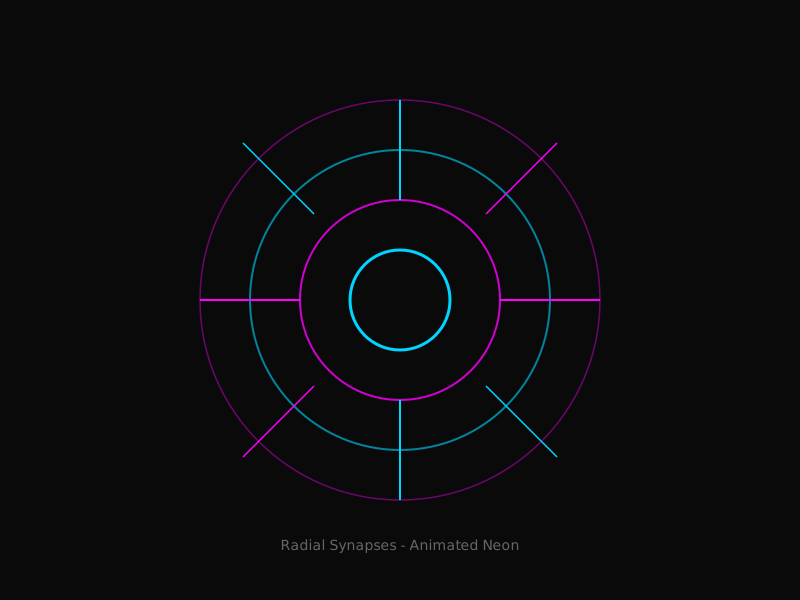
Radial Synapses was featured in the Guggenheim's landmark exhibition exploring the intersection of light art and architectural space.
The Rotunda Installation
The Guggenheim's iconic rotunda provided a perfect counterpoint to Radial Synapses, with the work's radial neon patterns echoing the Frank Lloyd Wright architecture's spiral geometry.
The installation spanned multiple levels, with neon tubing tracing synaptic pathways across the atrium and extending into the museum's upper galleries.
Technical Achievement
Radial Synapses represented one of the most ambitious neon installations attempted in the museum context, requiring custom engineering to suspend the delicate tubing across the atrium's void.
The work's animation sequence was programmed to pulse in waves that traveled from the central core outward, mimicking the firing patterns of neural networks.
Exhibition Documentation
Critical Reception
The installation received widespread critical acclaim for its integration of light and architecture, with critics noting how the work transformed the visitor's experience of the iconic rotunda space.
The exhibition attracted record attendance, with visitors often describing a sense of being inside a living neural network as they moved through the spaces.
Specifications
Title
Radial Synapses
Year
2009
Medium
Animated Neon
Dimensions
15m diameter x 3 levels
Venue
Guggenheim Museum
Location
Central Rotunda
Duration
6 weeks
Programming
Wave-based Neural Simulation