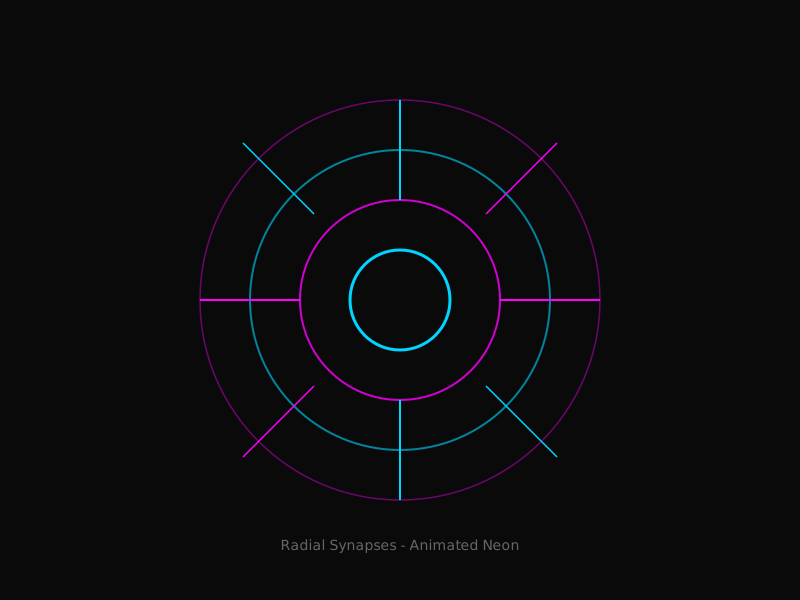
A landmark exhibition exploring the science of illumination, where Radial Synapses served as the centerpiece for a six-week exploration of light as a medium for artistic expression.
Exhibition Overview
The Museum of Luminous Phenomena dedicated their 2009 season to exploring the intersection of light, science, and art. The exhibition brought together works from twelve artists spanning 50 years of light-based artwork.
The show was organized in collaboration with the nearby university physics department, which provided scientific consultation and contributed educational materials about the physics of light.
Radial Synapses as Centerpiece
Radial Synapses was selected as the exhibition's centerpiece based on its unique ability to visualize complex scientific concepts through artistic means. The piece occupied the museum's central atrium, visible from all three floors.
A team of neuroscientists was on hand for the opening weekend to discuss the accuracy of the neural simulation and to engage visitors in conversations about the science behind the art.
Exhibition Statistics
Educational Programs
The exhibition included a robust educational program with daily talks, hands-on workshops for children, and evening lectures for adults. These programs drew nearly 5,000 participants over the course of the show.
A curriculum guide was developed for local schools, and the museum offered free admission for school groups on Tuesday and Thursday mornings throughout the run.
Critical Response
The exhibition received widespread critical acclaim, with reviews praising both the quality of the individual works and the coherent curatorial vision that tied them together. The show was nominated for Exhibition of the Year by the American Alliance of Museums.
Many reviewers specifically cited Radial Synapses as a highlight, with one noting that the piece "transforms our understanding of both neural networks and neon art."