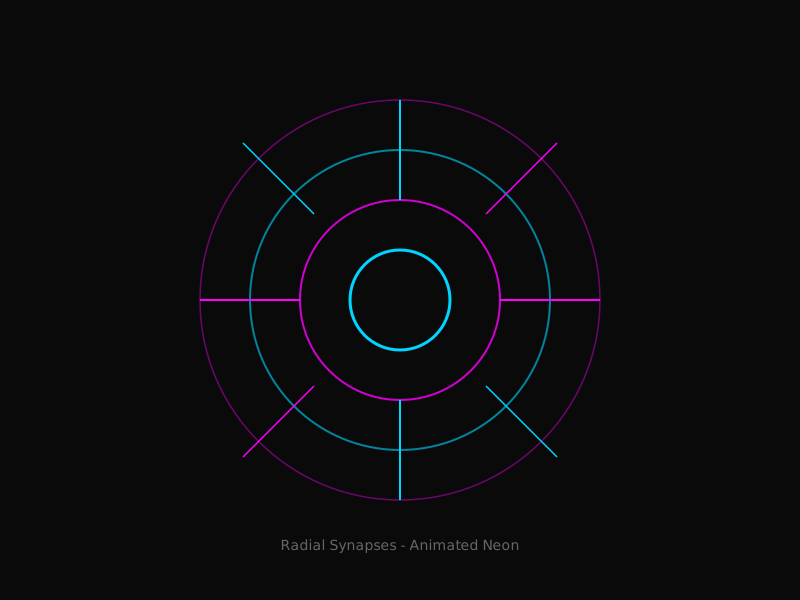
Radial Synapses was featured in a groundbreaking exhibition at the Denver Art Museum exploring the intersection of art and neuroscience, with educational programming developed in partnership with local universities.
Art & Science Initiative
The Denver Art Museum's 2011 programming focused on the intersection of art and science, with Radial Synapses chosen as the centerpiece of the neuroscience-themed exhibition. The museum collaborated with the University of Colorado Anschutz Medical Campus.
The exhibition explored how artists and scientists alike are engaged in visualization—making visible the invisible, whether neural networks or light patterns. Radial Synapses embodied this dialogue directly.

Scientific Partnership
The exhibition included a research component where museum visitors participated in actual neuroscience experiments, using the experience of viewing Radial Synapses as a stimulus for studying visual perception and neural response.
Researchers from the medical campus published findings based on the study, noting unexpected insights about how viewers perceive the simulated neural firing patterns in the artwork.
Exhibition Statistics
Public Programs
Over 200 public programs were offered during the exhibition, including artist talks, neuroscience lectures, hands-on workshops, and evening events for adults. The programming reached audiences beyond traditional museum visitors.
"Neon Lab" workshops allowed participants to create their own light-based artworks while learning about the science of luminescence. These popular programs sold out within hours.
Legacy
The Denver Art Museum exhibition established a model for how science museums and art museums can collaborate on programming. The research findings from the exhibition have been cited in subsequent neuroscience studies.
The exhibition won the American Alliance of Museums' Excellence in Programming award, and the model has been replicated at institutions nationwide.